
Our teams support wealth advisors and their clients in their thinking.
What is transition infrastructure?
Transition infrastructure is an asset or a company providing the equipment and services essential to the major environmental, energy and digital transformations of the economy.
It may, for example, operate in energy production and storage, electrification, waste and resource management, data centres or digital networks.
The notion therefore goes well beyond traditional infrastructure. It reflects the changing needs of European economies: the transitions themselves create new infrastructure needs.
This dynamic is particularly visible in Europe, where decarbonisation, energy independence, competitiveness and technological sovereignty goals require substantial investment.
Modernising Europe’s power grids alone would require €584 billion of investment by 2030, according to a European Commission estimate cited by the European Investment Bank (EIB).[1][2]
What are the three major transitions reshaping infrastructure in Europe?
1. The environmental transition: changing how we use resources
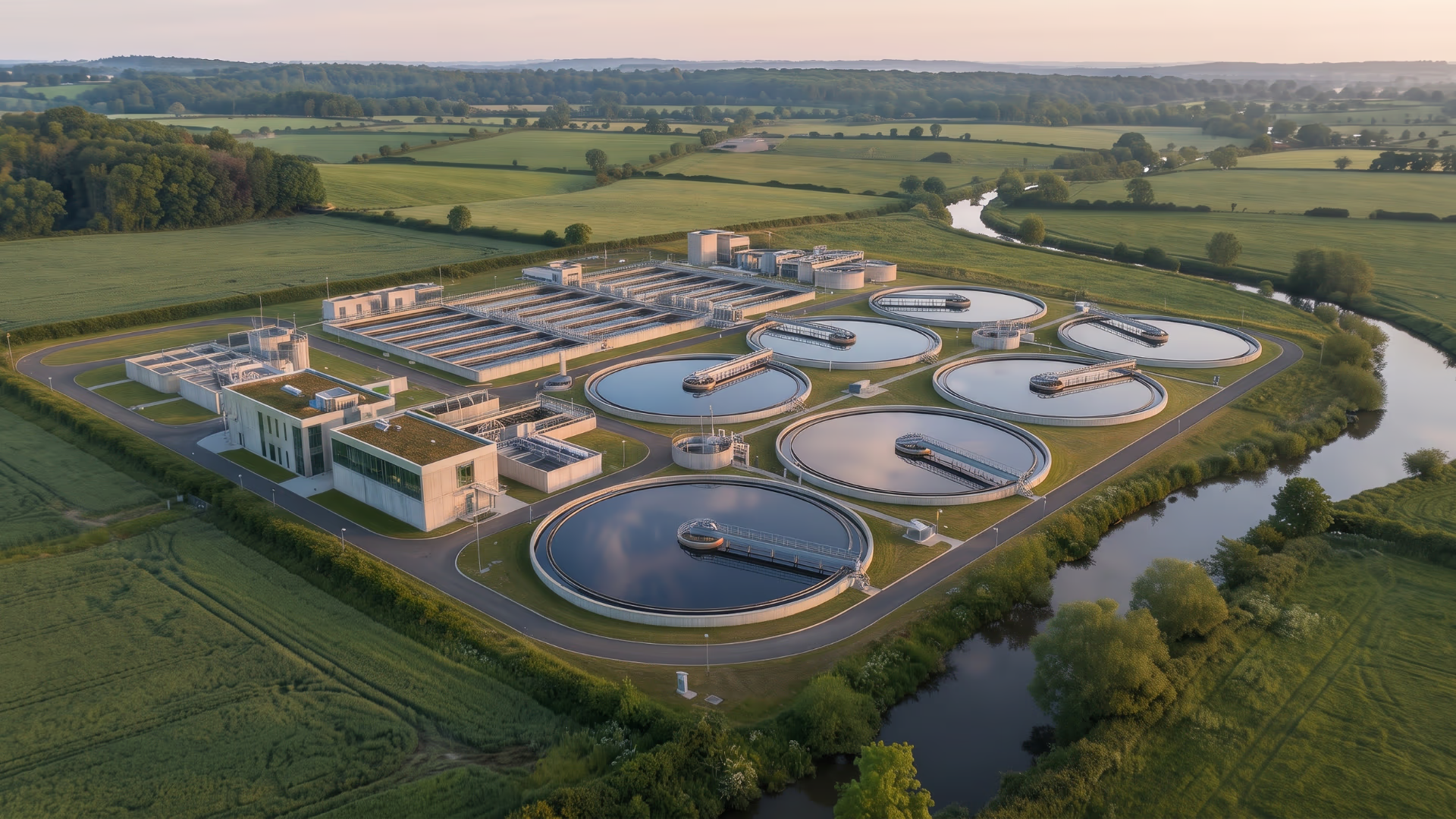
The environmental transition is not only about energy production. It also means rethinking how economies use, treat and reuse their resources.
Waste treatment and recycling, water management, the circular economy, depollution and solutions that reduce the environmental footprint of economic activity all require dedicated infrastructure.
European regulation is one of the drivers of this transformation. In the water sector, for example, the European Commission has for several years stressed the scale of investment needed to meet European targets for drinking water, wastewater treatment and resilience.[7]
For the investor, the challenge is notably to identify companies able to meet these structural needs with business models established enough to display genuine infrastructure characteristics.
2. The energy transition: electrifying and adapting grids
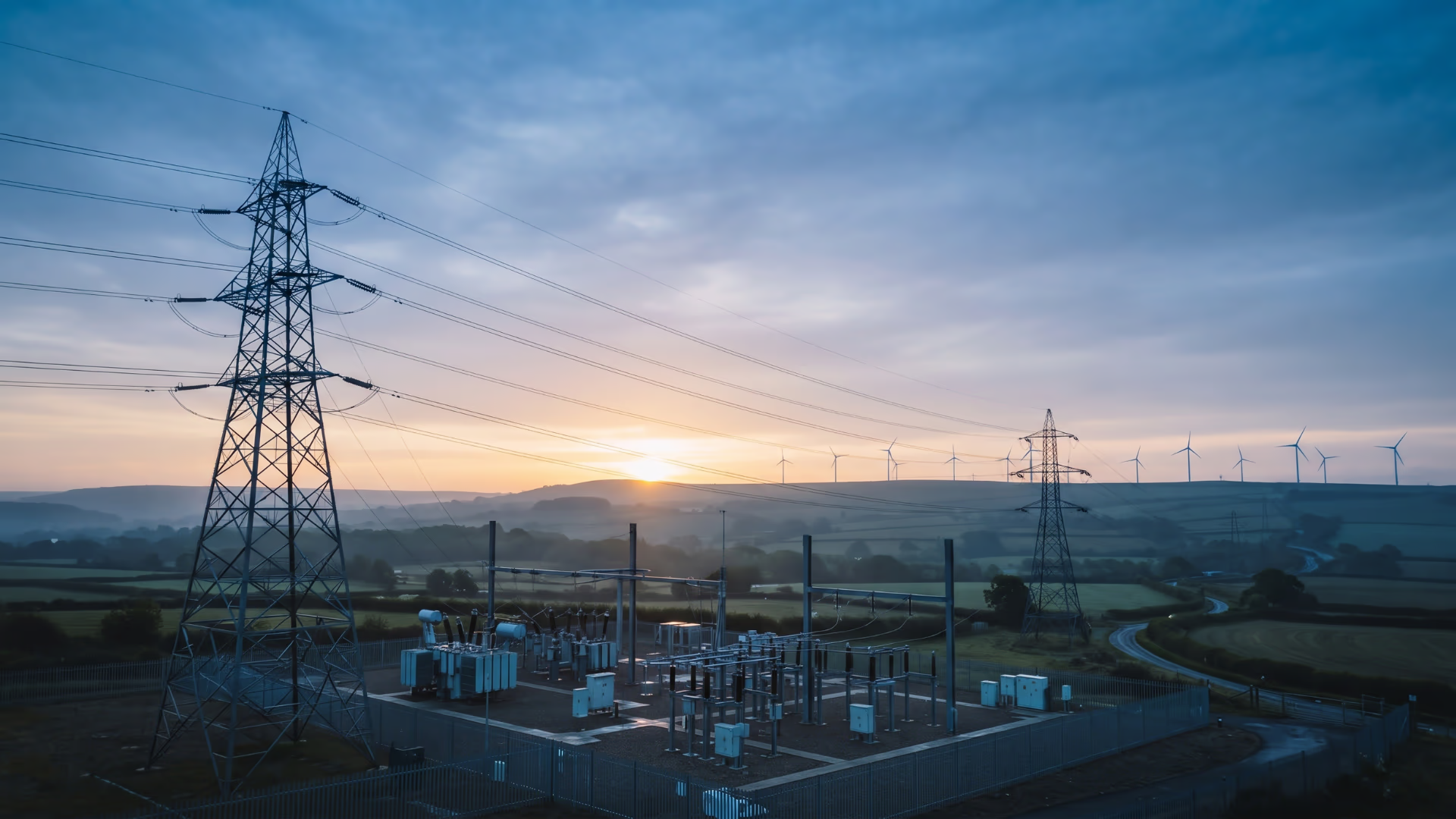
Producing more renewable electricity is not enough. It must also be transported, stored and delivered to where it is consumed.
This is one of Europe’s major challenges in the coming years.
The electrification of transport, buildings and industry increases the need for grids, interconnections, storage and energy infrastructure. The European Commission now aims for an electrification rate of 46% of European energy consumption by 2040, compared with around 23% today.[3]
At the same time, a large part of Europe’s grids needs to be modernised. The EIB points out that grid investment still lags behind the development of renewable capacity.[6]
The energy transition is therefore also, and perhaps above all, an infrastructure challenge.
3. The digital transition: building the infrastructure of the digital economy

Artificial intelligence is intangible in its uses, but very physical in its needs.
Its development requires ever-greater computing capacity, data centres, energy, telecommunications networks and connectivity infrastructure.
This issue takes on a particular dimension in Europe, given the stakes of digital and technological sovereignty.
In 2026, the European Commission notes that 96.8% of European households have basic 5G coverage, but that fibre roll-out, semiconductors and computing capacity remain behind the European targets for 2030.[4][5]
The EIB also estimates that the expansion of generative AI will increase Europe’s needs for data centres, energy infrastructure, computing capacity and cybersecurity.[8]
Key takeaways
- Europe’s three major transitions — environmental, energy and digital — rely on physical assets.
- Grids, storage, water treatment, data centres and connectivity require substantial capital to scale up.
What is Growth Infrastructure?
Growth Infrastructure is an investment strategy targeting companies that already display certain infrastructure characteristics while still having significant growth potential.
This is what distinguishes it from strategies investing in highly mature infrastructure.
Target companies may thus benefit from essential services, high barriers to entry or contracted revenues, while operating in markets where needs are growing rapidly.
Value creation potential therefore does not come only from the income generated by the asset. It also rests on the development of the company: increased capacity, new markets, international expansion or bolt-on acquisitions.
Growth Infrastructure thus sits at the meeting point of two dynamics:
“Infrastructure characteristics + the growth potential of companies still in a development phase.”
This combination, however, implies a different risk profile from that of mature infrastructure.
How is value created in Growth Infrastructure?
One of the challenges of a Growth Infrastructure strategy is to identify companies that are already established but could become larger platforms.
A Buy & Build approach can help support this transformation.
Value creation can then rely on several levers: structuring the company, operational improvement, developing new capabilities, targeted acquisitions, consolidating a fragmented market or international expansion.
The manager’s task is therefore not only to select an attractive infrastructure asset. It is also to scale up the company that develops or operates it.
This makes the operational and sector experience of the management team particularly important.
Is transition infrastructure resilient?
The infrastructure nature of an asset must be distinguished from its level of risk.
Certain characteristics can contribute to an investment’s resilience: the essential nature of the service provided, barriers to entry, long-term contracts or lower demand sensitivity to economic cycles.
But they do not eliminate risk.
A Growth Infrastructure strategy may in particular be exposed to development, execution, regulatory, technological and financial risks, as well as risks linked to leverage. The maturity of the company, the quality of its contracts and its ability to generate cash flow must also be analysed.
Two funds labelled “infrastructure” can therefore have very different risk/return profiles.
Key takeaways
- The infrastructure nature of an asset does not eliminate risk.
- Two funds labelled “infrastructure” can have very different risk/return profiles.
How to invest in transition infrastructure?
For a private investor, investing directly in infrastructure remains hard to access. It generally requires substantial capital as well as specific sector, operational, legal and financial expertise.
Access therefore mainly goes through funds specialised in infrastructure.
In private markets, these funds can be closed-ended and invest over several years in a limited number of companies or assets. The investor commits for a long horizon and accepts reduced or no liquidity for the life of the fund.
Some institutional funds can also be made available to private investors through a feeder fund, which pools their commitments before investing them in the underlying fund.
Access to a strategy is only part of the picture. Manager selection and the structuring of the vehicle used to invest are two decisive dimensions of private markets investing.
Infrastructure, private equity, private debt: a selection of funds for wealth professionals.
Which criteria to analyse before investing in Growth Infrastructure?
The first reflex is not to treat all infrastructure strategies as equivalent.
The investor and their advisor should look in particular at the management team’s experience in the strategy concerned, its track record, the sectors and geographies targeted, the maturity of the companies, the visibility of their revenues and their level of debt.
It is also necessary to understand how the manager intends to create value. A strategy relying mainly on cash flows from existing assets does not have the same profile as one in which a large share of expected performance depends on growth and on the execution of a Buy & Build plan.
Finally, the terms of the fund — investment period, capital calls, distributions, fees and liquidity — must be analysed just as carefully as its underlying assets.
Key takeaways
- Before investing, analyse the management team, its track record, the maturity of the companies and their level of debt.
- Understand how value is created: cash flows from existing assets or execution of a Buy & Build plan.
- The fund’s terms (duration, capital calls, distributions, fees, liquidity) must be analysed as carefully as its assets.
What place should transition infrastructure have in an allocation?
There is not just one way to invest in infrastructure.
A diversified strategy invested in established assets can be a core building block of a portfolio, notably seeking diversification and cash-flow visibility.
Alongside it, a Growth Infrastructure strategy dedicated to the major transitions can play a different role: exposing part of the portfolio to long-term structural growth drivers.
The two approaches can therefore be complementary.
For Private Corner, this distinction is essential: building a private assets allocation is not about accumulating funds, but about understanding precisely the function of each strategy within the portfolio.
Accessing European Growth Infrastructure with Private Corner
It is in this spirit that Private Corner is launching Eurazeo Transition Infrastructure Feeder Fund II, a feeder fund giving access to the Eurazeo Transition Infrastructure II strategy.
Managed by Eurazeo Infrastructure Partners, the strategy is positioned on European Growth Infrastructure and targets three major transitions: environmental, energy and digital.
It targets European mid-market companies positioned in niche markets, combining infrastructure fundamentals — essential services, barriers to entry, contracted revenues — with development potential.
The target portfolio comprises 8 to 12 investments, mostly majority stakes, in OECD Europe excluding Türkiye, allocated as follows:
| Targeted transition | Target portfolio allocation |
|---|---|
| Environmental transition | 50% |
| Energy transition | 35% |
| Digital transition | 15% |
Value creation relies notably on a Buy & Build approach built around four steps: select, structure, stabilise and accelerate, in particular through targeted acquisitions and international development.
Accessible from €100,000, the fund allows private investors, through their financial advisors, to access a strategy previously reserved for institutional investors.
It complements Private Corner’s approach to infrastructure with a satellite building block dedicated to the major transitions.
Talk to our teams about access terms and the fund’s characteristics.
Conclusion – A satellite building block, to understand before including it
Europe’s major transitions create lasting infrastructure needs, but not all infrastructure strategies are equal: the risk profile of Growth Infrastructure differs from that of mature infrastructure. Before investing, manager selection, the structuring of the vehicle and the role of the strategy within the portfolio should be analysed with the same care as the underlying assets.
FAQ – Transition infrastructure and Growth Infrastructure
What is transition infrastructure?
Transition infrastructure is an asset or a company essential to rolling out environmental, energy or digital transformations.
Why are needs growing in Europe?
Decarbonisation, electrification, AI and digital sovereignty require new physical capacity: grids, storage, data centres, connectivity, water treatment and resource management.
What is Growth Infrastructure?
It is a strategy targeting companies that have infrastructure characteristics while retaining significant growth potential.
How does it differ from mature infrastructure?
Mature infrastructure relies more on established assets and their cash flows. In Growth Infrastructure, a larger share of value creation is sought through the growth and development of companies.
How can a private investor access it?
Mainly through specialised funds. Feeder funds can also provide access to certain institutional strategies, with access terms adapted to private clients.
What are the main risks?
Beyond the capital loss and illiquidity inherent to private markets, investments may carry development, operational, regulatory, technological or financial risks.
Sources
- European Commission, European Grids Package and Grids Action Plan
- European Investment Bank, Grid investments and renewables in Thuringia
- European Commission, Electrification Action Plan, COM(2026) 595 final, 17 July 2026
- European Commission, State of the Digital Decade 2026, 17 June 2026
- European Commission, Digital Decade 2026 – Connectivity Coverage in Europe 2025
- European Investment Bank, Electricity grids investment
- European Commission, Water Resilience Strategy – actions tracker
- European Investment Bank, EIB Investment Report 2025/2026: Capitalising on Europe’s strengths
Disclaimer. Private Corner is a portfolio management company authorised by the French financial markets authority (Autorité des marchés financiers, AMF) under number GP-20000038. This article is published for information and educational purposes only. It does not constitute investment advice, a personalised recommendation, or an offer or solicitation to buy or subscribe for units or shares of a fund. It is intended for wealth professionals and does not take into account the personal situation, objectives or risk tolerance of each investor. Investing in private markets involves risks, including the risk of partial or total loss of capital, illiquidity risk (amounts invested may be locked up for the entire life of the fund) and the risk of performance dispersion between funds. Past performance is not a guarantee of future performance. The objectives, target allocations and characteristics of the strategy mentioned are not guaranteed and may change. Before any decision, investors should consult the fund’s regulatory documentation (including its rules or articles of association and its key information document), learn about the associated risks and fees, and speak to their advisor. The information and figures cited come from the sources indicated above as of the publication date of the article.