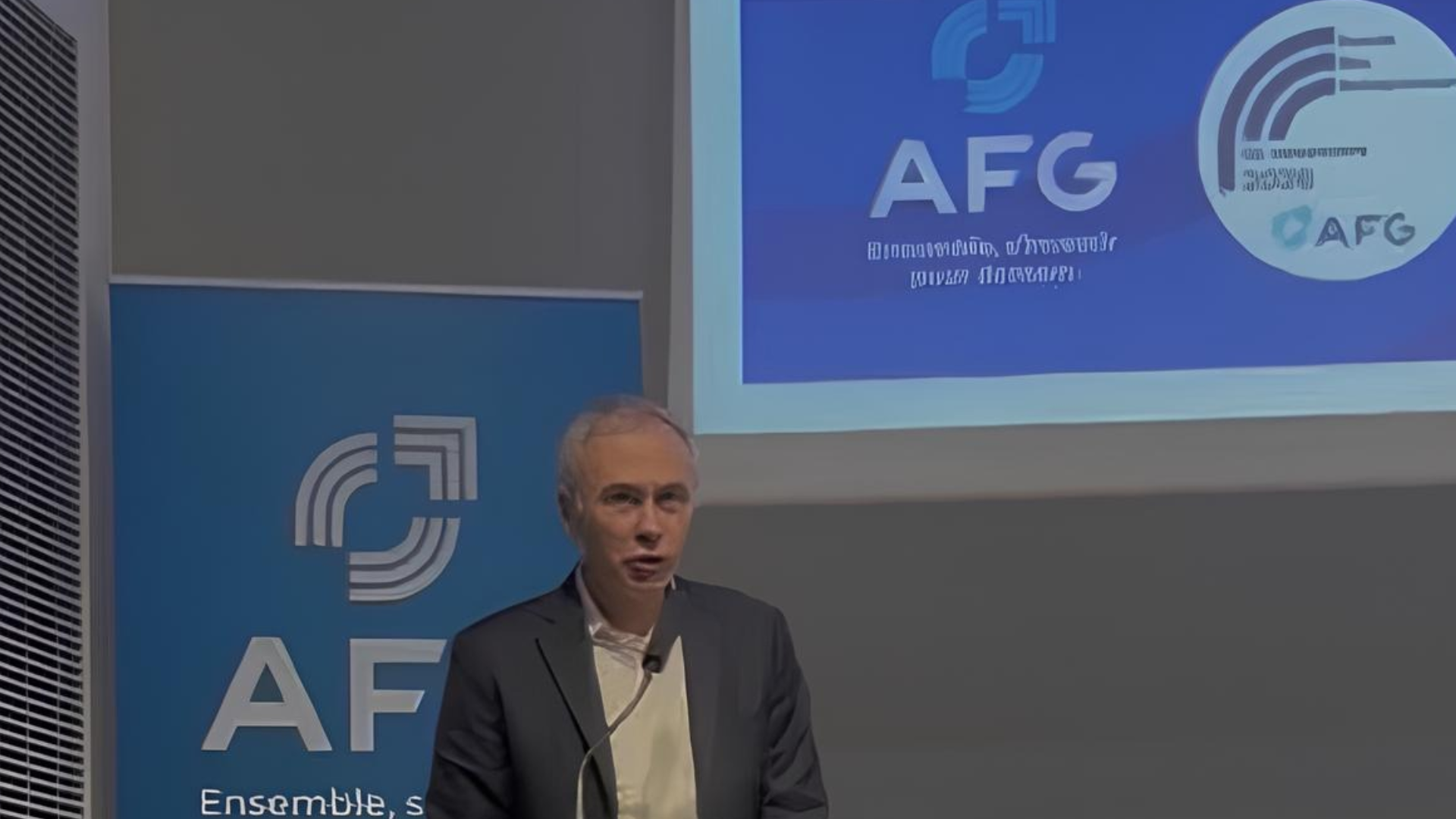
The statements revealed a convergence on the recognition of advice, but also different concerns. Advisers’ representatives defend an activity whose value goes beyond the product subscribed. Asset managers seek to secure their distribution relationships and the remuneration that goes with them.
These expectations are linked: each depends on the other for the information needed to meet its own obligations. The difficulty lies in organising this interdependence without blurring the roles.
Commissions and retrocessions: an economic debate as much as a regulatory one
The rejection of the European agreement on the RIS omnibus directive was met with measured relief. Several speakers pointed out that it could also weaken the compromise reached on the recognition of advice and of its remuneration through commissions.
This paradox shows how deep the issue runs. The debate on retrocessions is about how to fund advice and make it accessible to different categories of savers.
The opposition between commissions and fees nevertheless leaves one question unanswered: which service is being paid for, for whose benefit and with what incentives? No payment model, on its own, is enough to establish the quality of the service.
The defence of advice is therefore better served by focusing on its contribution to wealth decisions, beyond the defence of its remuneration model. That is also the difficulty of the exercise: this contribution is assessed across a client’s overall situation, whereas fees are often examined product by product.
Value for Money: the choice of comparator is never neutral
The reservations expressed about benchmarks and delisting practices in life insurance raise an essential question: who defines the criteria by which an offer is judged too expensive?
Comparing fees requires building sufficiently homogeneous categories. Yet the choice of these categories determines which differences are recognised, and which are erased. Strategy, risks, access conditions and associated services can change the significance of a price gap.
This difficulty does not rule out discussing costs. It requires making the comparison itself explainable.
A benchmark can become a filter for market access. When it conditions listing, its methodology shapes the solutions actually offered to savers. Transparency on comparison universes and selection criteria is therefore a competition issue as much as one of client protection.
Proof of service rendered: where tensions between partners show
Discussions on a common document attesting to the service rendered brought out an operational tension. Asset managers are looking for elements that allow them to justify their practices; advisers fear a proliferation of requests, some of them sensitive, and an extension of the control exercised by their partners.
One can read in this a chain-protection mechanism: faced with uncertainty, each player asks the other for more supporting evidence. Taken separately, each questionnaire may seem legitimate. Their accumulation can nonetheless produce a system that is costly, redundant and hard to use.
The harmonisation discussed during the round table makes full sense here. Its value will depend on its ability to clarify what must be demonstrated and by whom. A common document does not, on its own, resolve ambiguity over responsibilities.
Reciprocity is just as decisive: a distributor’s ability to meet its partners’ expectations also depends on the quality and availability of the information supplied by producers.
This reflection also has a security dimension. The discussions recalled how sensitive the data held by firms is, and the risks associated with its circulation. The quality of an evidence system therefore also depends on its ability to limit the information exchanged to what is necessary. Documentation harmonisation, confidentiality and the securing of exchanges are different dimensions of a single issue.
Simplification, a condition for diversity
The documentation burden also has economic consequences. Its cost weighs more heavily on firms with fewer resources to absorb it.
Excessive fragmentation of requirements could thus encourage firms to concentrate their relationships on a smaller number of partners. The risk would then be to gradually narrow the range of solutions considered for their clients.
Simplification therefore bears on the ability to preserve a diversified distribution. This point gives a collective scope to the calls for standardisation made during the round table.
The quality of the partnership is also measured in day-to-day operations
The last part of the round table shifted the perspective: advisers’ representatives set out their expectations of asset managers. Beyond the presentation of strategies, they stressed the importance of meetings, the availability of teams, training and documents that are easy to use.
These expectations reveal a sometimes less visible dimension of choosing a partner: the ability to work together. An offer can be relevant financially while being hard to fit into the way a firm operates. Conversely, accessible information, available contacts and consistent processes contribute to the quality of the relationship.
The quality of a strategy and that of the partnership are thus two complementary dimensions of an asset manager’s offer. Simplification takes on a concrete significance here: it frees up time and makes it easier to take ownership of the solutions proposed.
It also has a competitive dimension. Overly fragmented documentation requirements can encourage firms to concentrate their relationships on a smaller number of partners. Harmonising practices therefore also helps preserve the diversity of solutions considered for savers.
Discover Private Corner’s B2B platform, reserved for wealth management professionals.
Closed-ended funds: advice does not end at subscription
Closing a fund does not close the scope of advice. The absence of redemption rights removes neither the need to understand the life of the investment nor the need to assess its place in the client’s wealth.
Private markets are sometimes perceived as opaque. For Private Corner, the long time horizon requires, on the contrary, making the life of the fund readable: capital deployment, portfolio evolution, capital calls and distributions. This information fuels dialogue and bridges what happens in the fund and what it means for the investor.
Because the commitment spans the long term, it also remains a full component of an overall allocation that itself keeps evolving. Being unable to exit the fund increases the value of understanding its trajectory to inform the decisions taken around it. Cash-flow simulators make it possible to explore different scenarios of calls and distributions, estimate exposure over time and put new commitments into perspective, without confusing projections with certainties.
The value of advice beyond subscription finds its full place here: in the link between the life of the fund, the investor’s understanding of it and the evolution of their allocation.
By bringing together the views of producers and advisers’ representatives, the AFG brought to light a demanding equation: making the value of advice more readable, while preserving the economic and operational conditions that make it possible to deliver it.
To conclude, it remains essential to consider both sides of the relationship: the value of the advice delivered to the saver and the contribution of asset managers to the partnership that supports it. For Private Corner, this reflection resonates particularly in private markets, where the readability of information and the continuity of the relationship matter most over the long term.
Access reserved for wealth management professionals.
Disclaimer: this document is for information purposes only, intended for wealth management professionals, and issued by Private Corner, an asset management company authorised by the AMF (GP-20000038). It does not constitute investment advice or a recommendation to subscribe. Investments in private markets involve risks including capital loss, illiquidity and valuation risk. Past performance and forecasts are not indicative of future performance.